 |
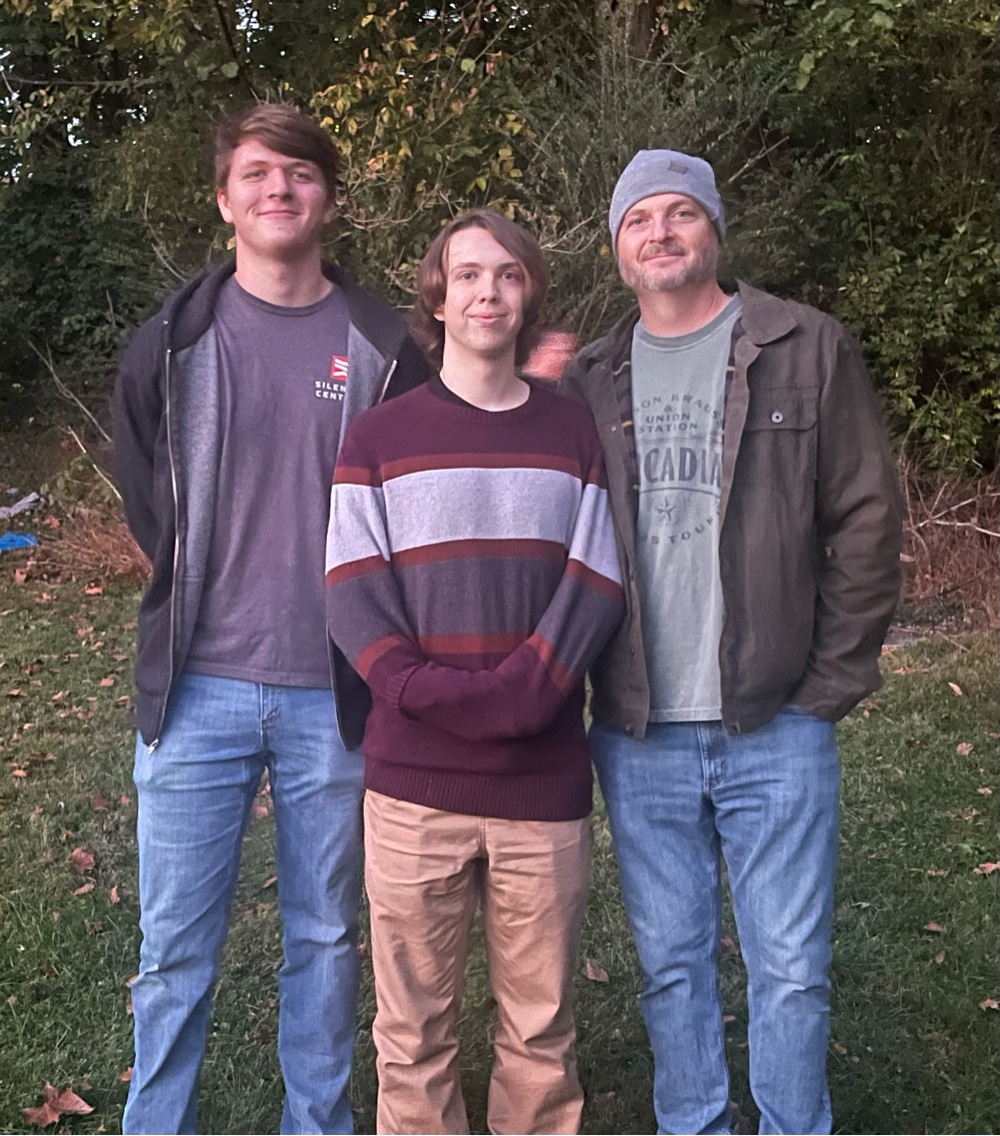
| Isaac wrote and directed a very scary Halloween show with Tusculum University this past weekend. We left the girls at home but the boys and I attended! |

Sunday, October 25, 2026
Halloween show

Wednesday, October 21, 2026
Hannah "I know know"
I'm really enjoying doing some flashing back to funny kid videos. I have soooo many. Here's another random one featuring the awesome Hannah:
Sunday, October 18, 2026
Saturday, October 17, 2026
Wednesday, October 14, 2026
Sitting with discomfort
Acceptance isn't feeling comfortable with uncertainty. It's making room for uncertainty without repeatedly trying to eliminate it.
This is the whole story.
This summarizes everything I am working to learn right now.
My entire life I avoided uncertainty by "checking in" on everyone and everything. I would mentally do a "run around" in my mind making sure there was nothing unsettled in my brain or my heart or anywhere.
But those behaviors was actually running me into the ground.
So now I am learning to sit in discomfort.
Someone doesn't text me back?
Leave it.
One of my kids seems frustrated at me?
Leave it.
Leave it.
Leave it.
Leave it.
That causes such incredible discomfort inside of me, and I am working so hard to allow it to be there and go about my life anyway.
Each day there is a new whack-a-mole. A new thing yells at me and says, "Hey! Over here! What about ME? Maybe I am the problem? Let's perseverate on this one!"
I am learning.
Hardest journey of my life right here.
But I am getting it.
I can't control what other people think or feel. I also can't control what my children want or need or think or feel.
I thought I could.
I cannot.
I must allow other people to be where they are.
And be okay where I am.
Father, You know how uncomfortable uncertainty feels to me. You know how desperately I want to make sure everyone is okay with me. My mind is telling stories, and they feel so real.
But Lord, I don't have to know everything. I don't have to manage everyone's feelings. I don't have to solve every possible problem.
Help me learn to rest in You while questions remain unanswered. Teach me that I can feel afraid without having to act on that fear.
When I want to reach for my phone, remind me that I can turn my attention back to the life You've given me.
I surrender what I cannot know and what I cannot control. Help me trust You with the people I love.
Amen.
Subscribe to:
Posts (Atom)